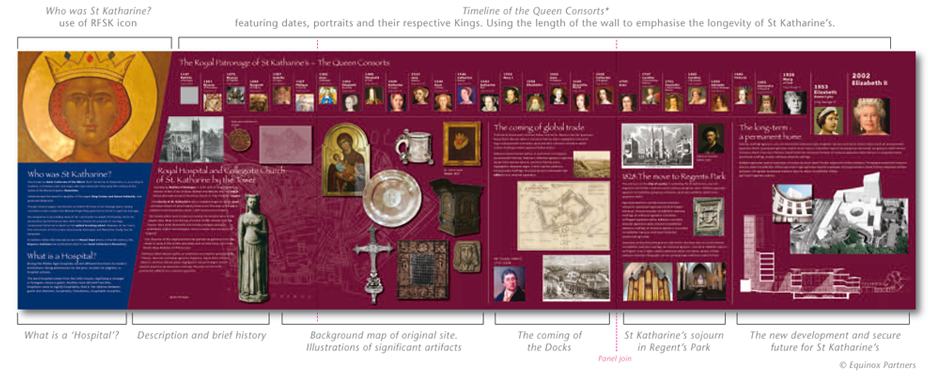
The History of The Royal Hospital and Collegiate Church of St Katharine by the Tower is a fascinating one.
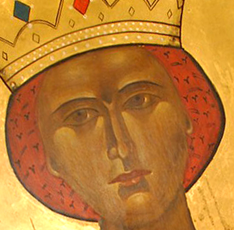 Named after the 4th century Christian martyr, the medieval church and hospital were originally located next to the Tower of London. It was founded in 1147 by King Stephen’s wife, Queen Matilda (or Maud) of Boulogne who created and endowed her foundation to commemorate the loss of two of her children, Stephen and Eustace (some say Baldwin and Matilda), who died as infants and were buried in the Priory Church of Holy Trinity at Aldgate.
St Katharine’s was further endowed by Queens Eleanor of Castile and Philippa of Hainault and henceforth has always had as Patron either the Queen Consort or the reigning Queen of the time – indeed, right up to our own Queen Elizabeth II.
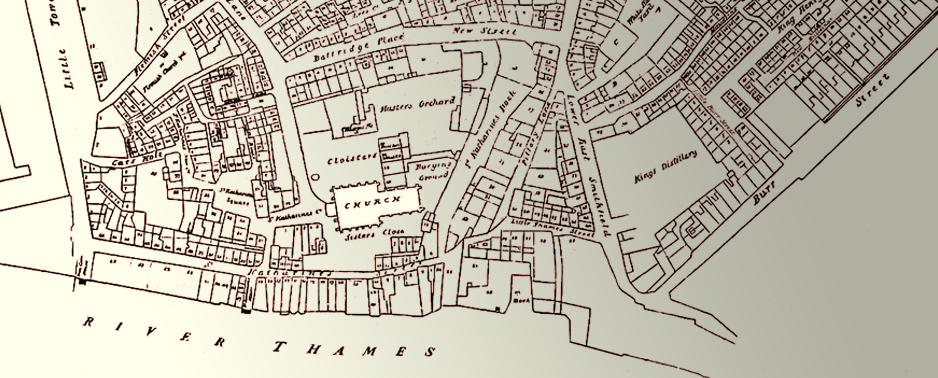
For over 600 years, St Katharine’s served as a centre of social welfare for those not eligible to enter within the Walls of the City of London and became inhabited by water-men, sailors, vagabonds and prostitutes. They inhabited a network of narrow streets and hovels displaying such colourful titles as Dark Entry, Cat’s Hole, Shovel Alley, Rookery, Pillory Lane – and Butcher Row, curiously a similar name to the current St Katharine’s site in Limehouse.
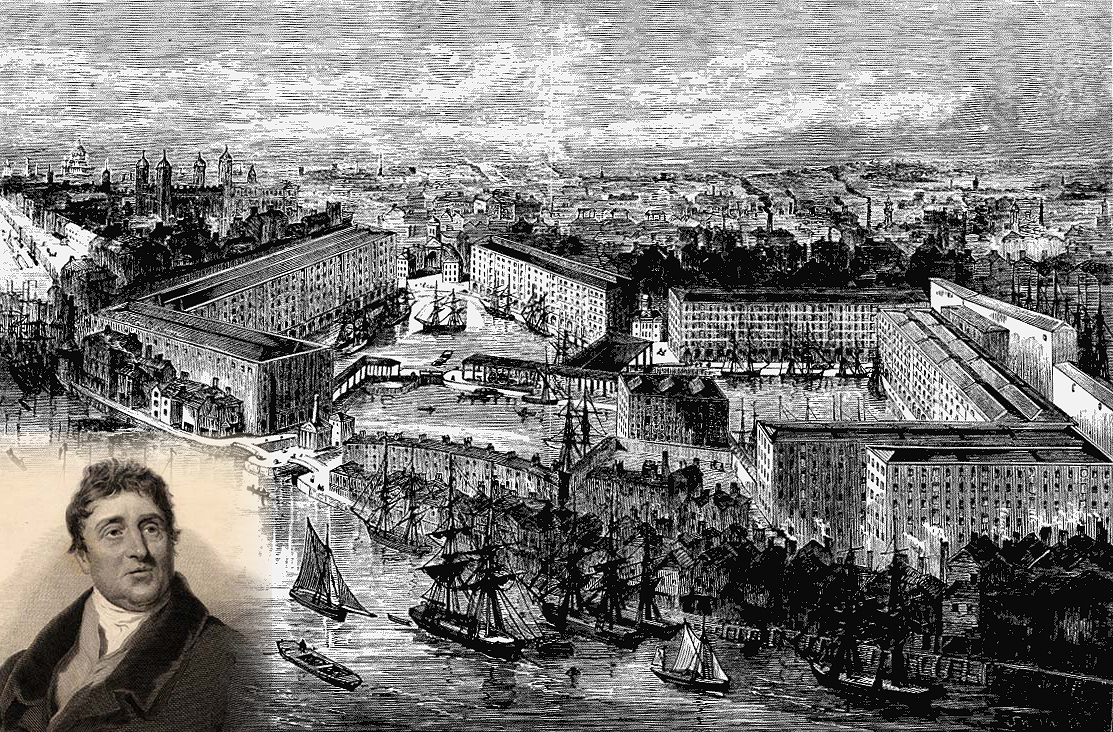
In 1825, commercial pressure from the City of London for larger docks up-river resulted in the St Katharine’s area being demolished. With its 14th & 15th century buildings, the site was cleared and the population of 3,000 inhabitants disbanded without recourse. New secure docking and storage facilities were designed and built by Thomas Telford for the transhipment and storage of valuable cargoes such as ivory and exotic spices – and is as the site remains today.
As for the Foundation, it was re-established in the newly developed area of Regents’ Park. A new church and almshouses were built on Cumberland Terrace but with a social care centre in Bromley-by-Bow.
125 years later, the neo-gothic church in Regents’ Park is now occupied by the Danish Church in London as the Danish ‘folkekirke’ abroad, and in 1947 the Foundation’s centre returned once more to the East End in Butcher Row, Limehouse (below).
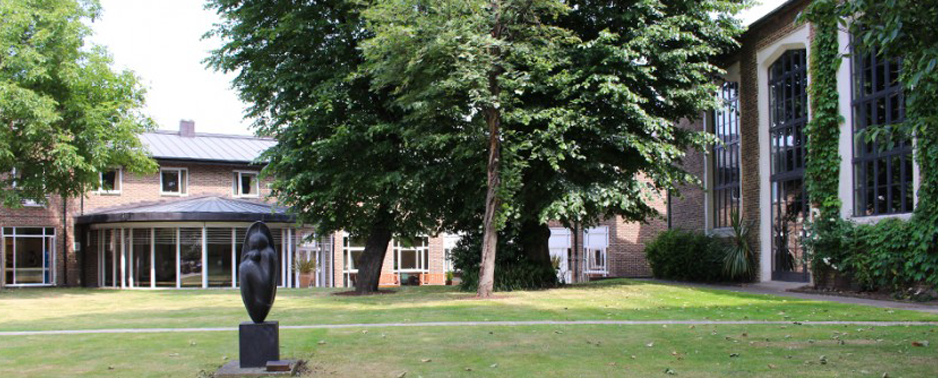
This current site of St Katharine’s is likely to be its last. The Foundation became occupants of the Vicarage of St James Radcliffe, a Grade 2* listed Georgian building occupying a site that did once include St James Church, destroyed in the Blitz of the Second World War, and was developed into a hostel and Christian retreat.
In 2002 a long anticipated renovation and extension of the retreat and conference facilities was undertaken. Central to this was the re-order of the Chapel in memory of Queen Elizabeth the Queen Mother, who was for 49 years Patron and friend of the Foundation.
Now in the 21st Century, large scale developments are in train. A programme of development for the site into social housing, a local community centre and workspaces is being undertaken that will bring St Katharine’s full circle back to care for the communities of the East End of London.
See https://equinoxpartners.co.uk/work/the-royal_foundation_of_st_katharine/
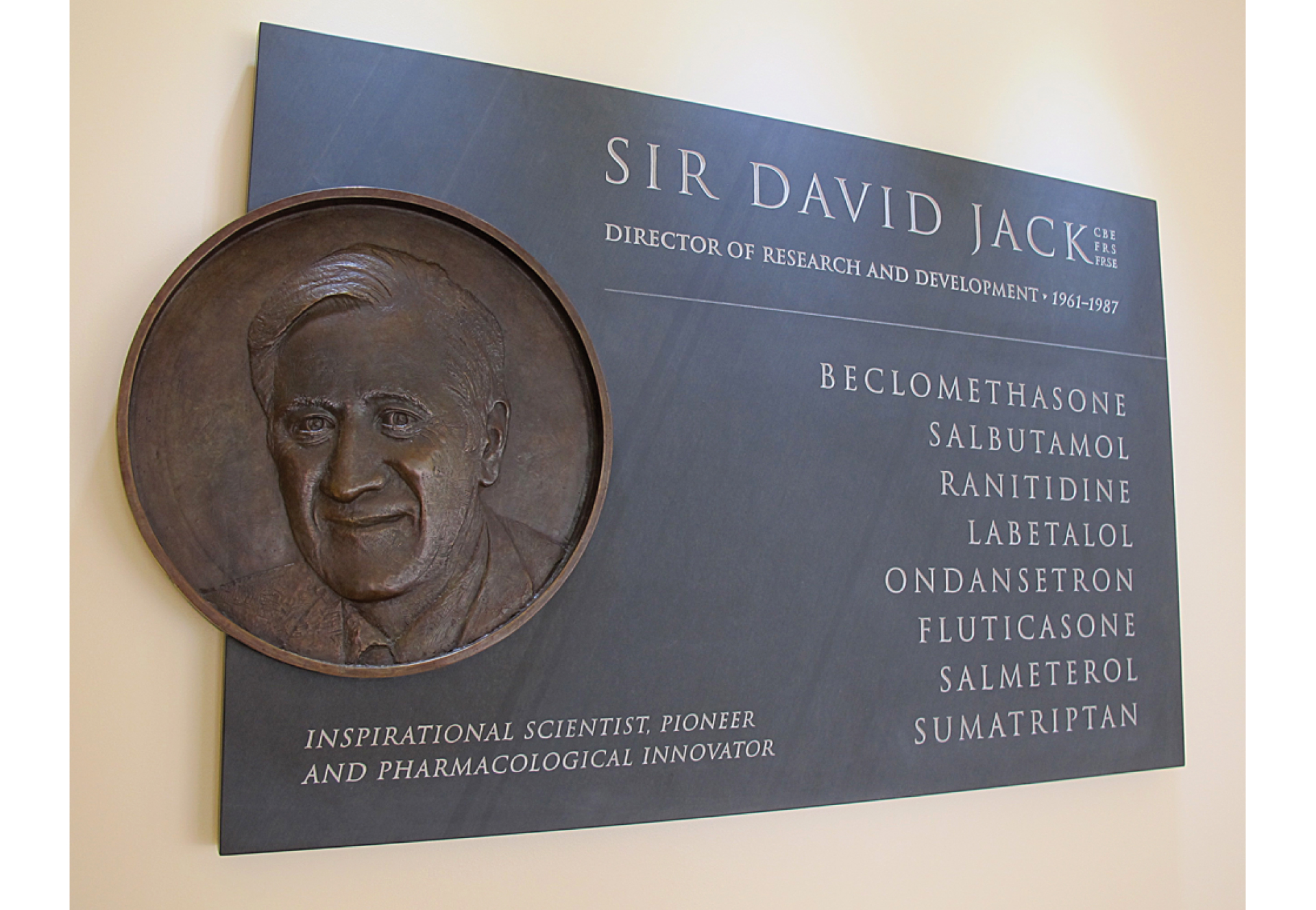
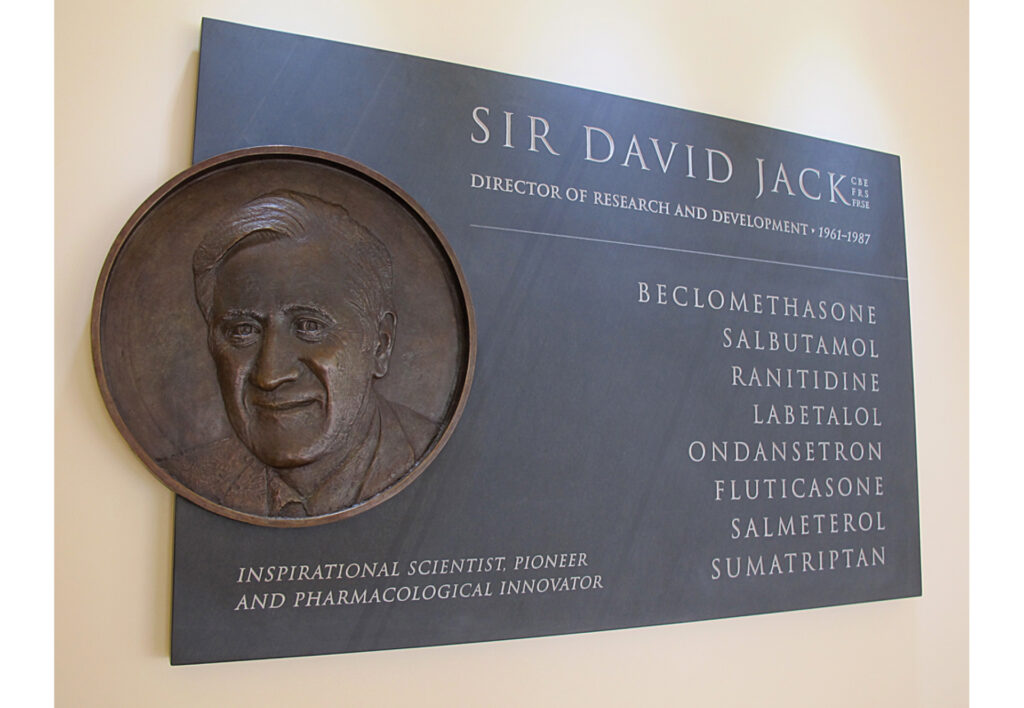
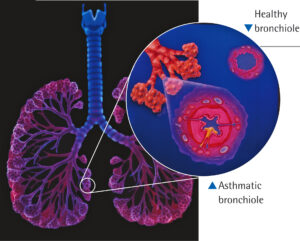 Asthma, a killer affliction in the late 1940s and 50s, became a mere inconvenience – relieved by a succession of increasingly effective treatments developed at Greenford in West London and Ware in Hertfordshire.